
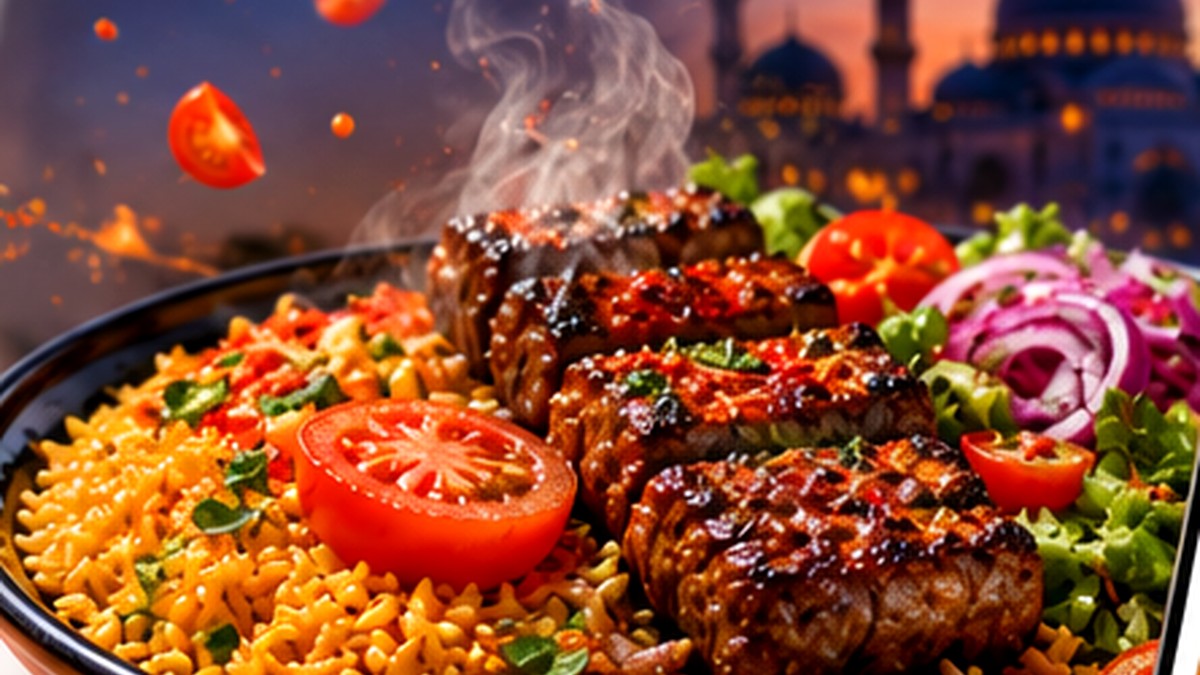
“Middle Eastern restaurant” is a useful discovery category, but it covers many distinct food traditions. Lebanese, Syrian, Iraqi, Jordanian, Palestinian and Gulf-influenced restaurants can share ingredients while using different breads, spices, grills and serving styles.
Instead of expecting one standard menu, use the category to discover restaurants and then look at what each venue actually specialises in.
Mezze is ideal when you want to explore a menu
Small plates such as hummus, moutabal, salads and hot starters allow a table to taste several dishes without committing to one large main course. For groups, this can make ordering easier because everyone can choose a few dishes to share.
If guests have allergies, shared plates require clear communication. Sesame, nuts, dairy and gluten can appear across several mezze dishes.
Grill menus vary by region and restaurant
Chicken skewers, kofta, lamb and mixed grills are common, but marinades and cuts differ. A restaurant that cooks over charcoal can produce a noticeably different flavour from one using a gas grill.
Check current halal sourcing rather than assuming from the cuisine. Many restaurants in this category use halal meat, but the individual venue remains the source of truth.
Shawarma can be a quick meal or a full plate
A shawarma wrap is fast and portable. A shawarma plate with rice, bread, pickles and sauces is more substantial. For lunch, the wrap may offer better value; for dinner, a full plate or sharing grill can feel more complete.
Bread and dips are part of the experience
Fresh flatbread can transform simple dips into a memorable starter. Some restaurants bake bread in-house, while others receive it from a bakery. If fresh bread is important to you, recent reviews often mention it.
Look beyond meat for a strong group menu
Rice dishes, salads, lentils, grilled vegetables and vegetarian mezze mean a good Middle Eastern restaurant can work well for mixed groups. Before reserving, check that the menu has enough variety for every guest rather than choosing based only on the grill selection.
Dessert and tea can extend the meal
Baklava-style pastries, semolina desserts, dates and tea service can make the restaurant suitable for a longer evening. If you are planning a celebration, ask whether the venue allows a cake from outside or offers its own dessert platters.
Learn the restaurant’s regional identity
A Lebanese restaurant may emphasise mezze and grilled meats, while an Iraqi restaurant may feature rice dishes and different kebab styles. Syrian and Palestinian restaurants can bring their own bread, pastries and home-style dishes. The more specific the restaurant is about its identity, the easier it is to know what to order.
Fresh herbs and pickles can define the meal
Parsley-heavy salads, pickled vegetables, fresh mint and lemon create brightness around grilled food. If you dislike sour or herb-forward flavours, ask which sides are milder. If you enjoy them, a restaurant that prepares salads to order can stand out.
Breakfast and lunch deserve more attention
Some Middle Eastern restaurants serve ful, eggs, flatbreads or breakfast platters that are very different from the evening grill menu. Lunchtime wraps and plates can also be excellent value. Search beyond dinner if you want to explore more of the cuisine.
Ask about platter size before ordering for two
Sharing platters are often generous, but names such as “mixed grill for two” are not standard. Check the number of skewers and included sides. A platter for two hungry adults may be very different from one intended to accompany several mezze dishes.
Takeaway can work especially well for mezze
Cold dips and salads travel well, while grilled bread and fried starters are more sensitive to time. If you are ordering a large takeaway spread, ask the restaurant how it recommends reheating or serving each item.
Use lunch specials to explore unfamiliar dishes
Neighbourhood restaurants often offer a smaller lunch plate, soup-and-wrap combination or daily special. These can be a lower-cost way to try a cuisine you do not know well. Ask what the daily dish contains rather than assuming it matches the permanent menu.
Fresh juice and alcohol policy are separate details
Some restaurants focus on fresh juices, mint lemonade and tea, while others also have a full bar. If you prefer an alcohol-free environment, check that point directly. A strong non-alcoholic drinks menu can be a useful positive signal for family and group meals, but it does not by itself prove anything about the food sourcing.
For celebrations, ask how sharing courses are timed
When a group orders mezze followed by grills, good pacing matters. If the main courses arrive before the starters are finished, the table can become crowded and hot food cools down. For a larger booking, ask whether the restaurant can serve the meal in stages.
Ofte stillede spørgsmål
Are all Middle Eastern restaurants halal?
No. Many are, but cuisine does not guarantee sourcing. Check the current restaurant information.
What is mezze?
Mezze is a style of serving multiple small dishes, often shared across the table.
Is a mixed grill good for first-time visitors?
It can be, because it offers several meats and cooking styles in one order. Check portion size and included sides before ordering.
Browse the restaurant guide or read more halal food and restaurant guides.